If your practice feels stale or if you feel like you’re on the wrong track, it’s time to reset your practice. Check out the tips below for a start.
Clarify your intent
 Get clear on what you want, because that is what will manifest. If you’re really clear that you want the benefits of meditation and mindfulness, then you’ll do what it takes to make it happen. (It’s also helpful to get clear on not wanting a practice—if that’s the case—because then you stop wasting your energy with thoughts like, “I should be meditating,” “I should be reading spiritual books,” “I should be, should be, should be…”)
Tip: For some folks who are trying to establish a regular meditation practice, sometimes all it takes is going to bed earlier because then it’s not such a challenge to wake up and meditate.

“Letting the days go by, let the water hold me down.” Retreat from your everyday life occasionally, so this doesn’t happen to you 🙂
Get away from your life for a few days
When you’re looking to reboot your practice, it’s essential to get away from your life for a few days. When you’re in your everyday groove, it’s hard to see what is right for you. All the routines we have make it hard to see new possibilities. Getting away creates a space to see how to reboot your practice.
Getting away from your life includes an electronics fast. If you go on a retreat and check your phone or tablet frequently for Instagram and FB updates, emails, texts, Twitter feeds, the news, let’s be honest, you are in no way getting away from your life. So don’t waste your time and money going on retreat and then negating the chance of it working by staying connected to your life.
If you don’t think you have the time to get away, revisit the first point—clarify your intent. If it’s important to you, you’ll make it happen; if it’s not, you won’t.
Tip: Clean the heck out of your living and work spaces before you get away. Our home and work spaces are a reflection of our mind, so when we clean them up, we create more space to see new ways ahead.
Hit the delete button on the people, places and activities that discourage your practice. When you get away, you frequently get insight into what needs to be dropped or changed. Check out these posts for more on being empirical about the places and activities that either empower or drain you and avoiding naysayers.
 Reinvigorate your mindfulness
Stop repeating your story in your head. Stop inwardly practicing conversations or debates. Don’t talk to your friends and relatives in your mind. Don’t inwardly “write reviews.” Instead, simply be in the moment—be in the experience without commentary. Mental chatter is draining and prevents you from both seeing what is correct and feeling calm. More on mindfulness as a core practice can be found here, and for a helpful trick with mindfulness, check out the 7-second rule.
Start something NEW and FUN
Whether it’s learning to cook, surf, paint, play an instrument, sew, etc., having something new and fun that excites you will give you energy and invigorate your life and meditation.
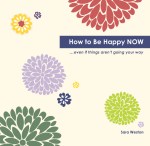
Read or re-read How to Be Happy Now. Almost every tip in the book will help you reboot your practice. A free excerpt is available here.

 It’s important to not judge your meditation. The only bad meditation is the one you don’t do! The truth is even when you have meditations that don’t feel as “good” or “powerful” as others, the light is still transforming you. It’s still working, even if it doesn’t feel like a good meditation to you.
 Don’t get stuck doing your meditation practice the same way all the time. What works best for you will change over time!
 It’s important to recognize and understand our biological impulses and then choose to follow them…or not! Our body has biological imperatives that were necessary for survival in earlier times but that are no longer useful. In fact, following these impulses can actually make us pretty unhappy. For instance, we are wired to gorge on food even when we are no longer hungry because when food was scarce it was beneficial to store as much fat as possible because it wasn’t known when we would eat again. These days in the West, where food is so readily available, this instinct no longer serves us and it certainly doesn’t lead to our happiness. Today we may want to eat an entire bag of chips but we won’t feel happy if we follow that impulse. Not only will we feel queasy from all the chips, we’ll also feel physically and psychically uncomfortable when we gain weight from overeating.
 People make incredibly bad decisions that lead to a lot of unhappiness when they aren’t financially independent. They’ll marry someone they don’t love or stay with a partner or spouse they don’t like solely because they don’t have the financial wherewithal to do what they really want to do. When you are financially independent and are not beholden to a parent, partner or spouse’s agenda or idea for your life, you are free to follow the choices that are appropriate for you, which is an amazingly freeing and happy feeling!

 Mindfulness is the process of watching what is passing through your mind and stopping the thoughts that are draining or unhealthy. Most things only need to be thought through once. The rest of the thinking, the mulling over and obsessing, is not only draining, it actually makes it harder to objectively see what is best. When you keep your mind quiet and don’t play your worries, schemes and dreams over and over again, you create space for inner knowledge to bubble up and be heard.
 Keep on hand at all times great audio books, podcasts, music, books or magazines. It’s helpful to have something entertaining to do when you are waiting in line at the DMV or at the doctor’s office or when you’re caught in traffic or on the subway. There are so many draining situations that become the opposite when you have something interesting to occupy your mind. (Excerpted from the book
 How to Be Happy NOW
You must be logged in to post a comment.